Skip to navigation Skip to content
Oud Academia™

Crown Institute for Agarwood Science, Art & Sustainable Enterprise (CI-ASASE)

  • Home
    • Contact Us
    • News & Update
  • About Us
    • Executive Director Profile
      • Welcome Message
    • Speaker Profile – Biologist
    • Speaker Profile – Forester
    • Speaker Profile – Environmentalist
    • Business Profile
    • Primary Purpose
  • Core Divisions
    • HERITAGE & CULTURE
    • SCIENCE & TECHNOLOGY
    • ENTERPRISE & SUSTAINABILITY
    • ARTISANAL & PERFUMERY
  • Academia Programs
    • TESDA
      • Agarwood Farming NC I
      • Agarwood Farming NC II
      • Agarwood Farming NC III
  • Training Calendar
  • Home
  • Home
    • Contact Us
  • About Us
    • Speaker Profile – Biologist
    • Speaker Profile – Environmentalist
    • Speaker Profile – Forester
    • Executive Director Profile
      • Welcome Message
    • Primary Purpose
    • Business Profile
    • Business Viability
    • Business Plan
    • Brand Essence
  • Core Divisions
    • HERITAGE & CULTURE
      • Cultural Trade & Ethics Course
        • 1.1 Origins of Trade in Ancient Civilizations: Agarwood & the Birth of Global Exchange
        • 1.2 Sacred Commodities and Ritual Economies: How Spiritual Value Shaped Trade
        • 1.3 Agarwood in Religious, Spiritual, and Royal Traditions
        • 1.4 Cultural Symbolism of Scent and Incense
        • 1.5 Ancient Trade Routes: Incense Road, Silk Road, and Maritime Networks
        • 2.1 Agarwood Across Faiths: Islam, Buddhism, Hinduism, Taoism, and Christianity
        • 2.2 Oud in Middle Eastern Hospitality and Identity
        • 2.3 Cultural Grading vs. Commercial Grading of Agarwood
        • 2.4 Traditional Harvesting Ethics in Agarwood
        • 2.5 Oral Traditions and Artisanal Knowledge in Agarwood (Oud) Cultures
        • 3.1 Classical Ethical Philosophies Applied to Trade: Lessons for Sacred and High-Value Commodities
        • 3.2 Fairness, Honesty, and Trust in Agarwood Trade and Culture
        • 3.3 Exploitation vs. Stewardship in Agarwood Cultivation and Trade
        • 3.4 The Impact of Greed and Commodification on Agarwood
        • 3.5 Ethical Dilemmas in High-Value Commodities: The Case of Agarwood
        • 4.1 Indigenous Intellectual Property Rights in Agarwood Knowledge and Trade
        • 4.2 Biopiracy and Misappropriation in Agarwood Knowledge and Trade
        • 4.3 Free, Prior, and Informed Consent (FPIC) in Agarwood Communities
        • 4.4 Community Benefit-Sharing Models in Agarwood Trade and Stewardship
        • 4.5 Ethical Documentation of Traditional Knowledge in Agarwood Practices
        • 5.1 Middle Eastern, East Asian, and Western Market Values in the Agarwood (Oud) Trade
        • 5.2 Cultural Etiquette in Agarwood Trade Negotiations
        • 5.3 Religious Considerations in Agarwood Product Handling
        • 5.4 Ethical Marketing and Cultural Appropriation in Agarwood Trade
        • 5.5 Luxury Ethics vs. Mass Commercialization in Agarwood Trade
        • 6.1 Ethical Harvesting vs. Destructive Extraction of Agarwood
        • 6.2 Conservation Ethics and CITES Alignment in Agarwood Trade
        • 6.3 Long-Term Ecological Responsibility in Agarwood Cultivation and Trade
        • 6.4 Intergenerational Stewardship in Agarwood Cultivation and Trade
        • 6.5 Regenerative Trade Models in Agarwood Commerce
        • 7.1 Ethical Storytelling vs. Greenwashing in Agarwood Trade
        • 7.2 Cultural Authenticity in Branding Agarwood Products
        • 7.3 Transparency Through Traceability and Blockchain in Agarwood Supply Chains
        • 7.4 Certifications, Provenance, and Ethical Seals in Agarwood Trade
        • 7.5 Consumer Education and Responsibility in Agarwood Trade
        • 8.1 Historical Exploitation Cases in Agarwood and High-Value Commodities
        • 8.2 Modern Illegal Trade Networks in Agarwood and High-Value Forest Commodities
        • 8.3 Success Stories of Ethical Sourcing in Agarwood and High-Value Commodities
        • 8.4 Community-Led Trade Models in Agarwood Commerce
        • 8.5 Failures and Lessons Learned in Agarwood Trade
        • 9.1 Creating a Personal or Organizational Code of Ethics in Agarwood Trade
        • 9.2 Ethical Sourcing Policies in Agarwood Trade
        • 9.3 Cultural Respect Protocols in Agarwood Trade
        • 9.4 Compliance with International Standards in Agarwood Trade
        • 9.5 Measuring Ethical Impact in Agarwood Trade
      • Ethereal Oud & Spirituality Course
        • 1.1 Origins of Agarwood as a Divine Material
        • 1.2 Mythologies and Legends of the “Wood of the Gods”
        • 1.3 The Psycho‑Spiritual Influence of Fragrance on the Human Mind and Soul
        • 2.1 Islam, Oud, and Sacred Scent in Purification and Prayer
        • 2.2 Buddhism, Agarwood, and the Path of Mindfulness
        • 2.3 Hinduism, Oud, and Sacred Fire Offerings (Homa/Yajna)
        • 2.4 Christianity, Sacred Incense, and Anointing Rituals
        • 2.5 Taoism & Shintoism – Fragrance as a Bridge to the Spirit World
        • 3.1 Scent, Vibration, and the Frequencies of Oud Oils
        • 3.2 Oud in Chakra Balancing, Reiki, and Energy Cleansing
        • 3.3 Integrating Oud into Holistic & Meditative Therapy Practices
        • 4.1 Guided Olfactory Meditation – Entering Stillness Through Scent
        • 4.2 Techniques for Spiritual Grounding and Transcendence
        • 4.3 Developing Personalized Oud‑Based Meditation Blends
        • 5.1 Preparing Spiritual Incense, Ritual Oils, and Anointing Perfumes
        • 5.2 Ethical and Sustainable Sourcing for Sacred Use
        • 5.3 Designing Personal or Community Rituals Centered on Agarwood
      • Global Oud Heritage Exhibit Course
        • 1.1 Definition of Cultural and Intangible Heritage in the Context of Agarwood (Oud)
        • 1.2 Agarwood as a Heritage Species
        • 1.3 Oud in Sacred Rituals, Medicine, and Royalty
        • 1.4 Cultural Meanings of Oud Across Civilizations
        • 1.5 Living Heritage vs. Static Artifacts
        • 2.1 Ancient Incense Routes
        • 2.2 Maritime and Silk Road Trade of Oud
        • 2.3 Role of Oud in Diplomacy and Royal Exchange
        • 2.4 Trade as Cultural Transmission
        • 2.5 Maps, Manuscripts, and Oral Histories
        • 3.1 Agarwood Formation and Defense Biology
        • 3.2 Resin Induction – Natural & Assisted Methods
        • 3.3 Chemistry of Oud Aroma
        • 3.4 Grading, Aging, and Scent Evolution of Oud
        • 3.5 Linking Science to Sensory Experience
        • 4.1 Oud in World Religions
        • 4.2 Incense Ceremonies and Sacred Spaces
        • 4.3 Spiritual Ethics of Harvesting and Use
        • 4.4 Ritual Objects and Ceremonial Tools
        • 5.1 Indigenous Agarwood Cultures
        • 5.2 Traditional Harvesting and Stewardship
        • 5.3 Oral Histories and Craftsmanship
        • 5.4 Ethics of Representation and Consent
        • 5.5 Community Co-Curation Models
        • 6.1 Agarwood Beads, Carvings, and Incense Art
        • 6.2 Oud in Classical and Modern Perfumery
        • 6.3 Craftsmanship and Artisan Identity
        • 6.4 Contemporary Interpretations of Oud
        • 7.1 Overharvesting and Extinction Risks
        • 7.2 CITES Protection and Legal Frameworks
        • 7.3 Ethical Sourcing and Traceability
        • 7.4 Conservation through Cultivation
        • 7.5 Future-Facing Stewardship Narratives
        • 8.1 Museum Curation Principles
        • 8.2 Sensory Design
        • 8.3 Flow, Pacing, and Visitor Engagement
        • 8.4 Accessibility and Inclusivity
        • 8.5 Interactive and Digital Exhibition Tools
        • 9.1 Digital Twins and Virtual Exhibits
        • 9.2 AR/VR Oud Journeys
        • 9.3 Blockchain Provenance Storytelling
        • 9.4 Interactive Maps and Timelines
        • 9.5 Global Online Access to Heritage
        • 10.1 Defining Exhibition Objectives
        • 10.2 Stakeholder Engagement
        • 10.3 Budgeting and Logistics
        • 10.4 Traveling and Permanent Exhibits
        • 10.5 Measuring Cultural Impact
      • Oud Cultural Studies Course
        • 1.1 Historical and Cultural Reverence of Agarwood
        • 1.2 Religious Symbolism of Agarwood
        • 1.3 The Rise of the Incense Roads: From Assam to Arabia
        • 1.4 Mythological and Poetic Representations of Oud
        • 2.1 Use of Agarwood in Meditation
        • 2.2 Ayurvedic and Traditional Chinese Medicine
        • 2.3 Japanese Kōdō Incense Rituals
        • 2.4 The Psychology of Scent
        • 3.1 Oud in Art, Poetry, and Music
        • 3.2 Royal Perfumeries and Courtly Traditions of Scent
        • 3.3 Modern Narratives of Sustainability and Heritage Conservation
        • 3.4 Craft Heritage: Incense, Beads, Sculpture & Perfumery Arts
        • 4.1 Historical Trade Routes & Cultural Diffusion Through Incense Commerce
        • 4.2 Influence of Agarwood on Diplomacy, Cross-Border Relations & Gift Exchange
        • 4.3 Cultural Identity and Ownership: Challenges of Globalization
        • 5.1 Modern Interpretations of Oud in Fashion, Film, and Design
        • 5.2 UNESCO Heritage Efforts & Ethnobotanical Documentation
        • 5.3 Reviving Local Incense Traditions & Artisanal Craftsmanship
        • 5.4 The role of education and Oud Academia in cultural preservation
      • Oud Storytelling & Oral Histories Course
    • SCIENCE & TECHNOLOGY
      • TC l – Agarwood Biotechnological Propagation Techniques Course
        • Design lab SOP manuals aligned with COPI
        • 1.1 Aquilaria species overview
        • 1.2 Natural vs. biotechnological propagation limitations
        • 1.3 Genetic variability and resin-yield implications
        • 1.4 Conservation, CITES, and sustainability drivers 
        • 2.1 Totipotency and cellular differentiation
        • 2.2 Types of tissue culture systems 
        • 2.3 Aseptic principles and contamination control
        • 2.4 Laboratory infrastructure & biosafety 
        • 3.1 Mother plant selection criteria 
        • 3.2 Explant types (nodal, leaf, hypocotyl, shoot tip) 
        • 3.3 Surface sterilization agents and protocols 
        • 3.4 Contamination diagnostics and troubleshooting
        • 4.1 MS, WPM, and customized agarwood media 
        • 4.2 Carbon sources and gelling agents 
        • 4.3 Plant Growth Regulators (Auxins, Cytokinins, GA₃)
        • 4.4 Media optimization strategies 
        • 5.1 Callus induction pathways 
        • 5.2 Direct vs. indirect organogenesis 
        • 5.3 Shoot regeneration protocols 
        • 5.4 Root induction strategies 
        • 5.5 Morphogenic response evaluation
        • 6.1 Causes of somaclonal variation 
        • 6.2 Minimization strategies 
        • 6.3 Genetic stability importance in agarwood yield 
        • 6.4 Overview of molecular markers (RAPD, ISSR – conceptual) 
        • 7.1 In-vitro to ex-vitro transition
        • 7.2 Substrate selection and humidity control 
        • 7.3 Mycorrhizal and microbial support 
        • 7.4 Survival rate optimization 
        • 8.1 Mass propagation strategies
        • 8.2 Temporary Immersion Systems (TIS) 
        • 8.3 Cost analysis and production economics 
        • 8.4 Integration with plantation programs
        • 9.1 SOP documentation
        • 9.2 Pathogen indexing
        • 9.3 Traceability and labeling 
        • 9.4 DENR, BPI, and CITES considerations
      • TC IIl – Agarwood Harvesting, Processing & Grading Course
        • 1.1 Biological basis of resin formation in agarwood
        • 1.2 Identifying resin zones in agarwood
        • 1.3 Core sampling (small bore testing)
        • 1.4 resin maturity indicators in agarwood
        • 1.5 when not to harvest agarwood
        • 1.6 harvest planning for agarwood,
        • 1.7 legal verification and regulatory compliance
        • 2.1 safe cutting and directional felling for agarwood trees
        • 2.2 extracting agarwood from the main trunk versus lateral branches
        • 2.3 mapping resin-rich sections in agarwood trees 
        • 2.4 minimizing resin loss during agarwood harvest
        • 2.5 preventing soil contamination during agarwood harvest
        • 2.6 bark removal in agarwood harvesting
        • 2.7 Immediate post-harvest care for agarwood
        • 2.8 Transport and handling of agarwood logs or branches
        • 3.1 Opening agarwood logs to locate and assess resin zones
        • 3.2 Techniques for:
        • 3.3 Removing sapwood from resinous heartwood
        • 3.4 Preventing mold, pests, and moisture issues in harvested agarwood
        • 3.5 Controlled drying of agarwood
        • 3.6 Proper storage of harvested agarwood
        • 3.7 Preparing agarwood samples for buyers
        • 5.1 Common defects in harvested agarwood
        • 5.2 Identifying adulterated or fake agarwood
        • 5.3 Cleaning protocols for harvested agarwood
        • 5.4 Sorting and reclassification of harvested agarwood
        • 7.1 Overview of agarwood (oud) price tiers in the Gulf region
        • 7.2 Chinese ceremonial and high-art agarwood grading system
        • 7.3 Preparing agarwood samples for high-end buyers
        • 7.4 Negotiation techniques for bulk vs. premium agarwood chips,
        • 7.5 How to avoid price downgrades for agarwood products
        • 7.6 Developing long-term buyer contracts for agarwood
      • TC IV – Reduced-Energy Hydrodistillation (REHD) Training Course
        • 1.1 Overview of natural oil extraction methods
        • 1.2 Traditional vs. modern hydrodistillation
        • 1.3 Sustainability and energy efficiency in essential oil production
        • 2.1 Physical and chemical principles of distillation
        • 2.2 Volatility, vapor pressure, and condensation dynamics
        • 2.3 Factors affecting oil yield and composition
        • 3.1 Boiler and condenser design for energy conservation
        • 3.2 Steam flow control, insulation, and thermal management
        • 3.3 Modular and scalable REHD systems for small to medium enterprises
        • 4.1 Temperature-pressure relationship and distillation kinetics
        • 4.2 Pre-treatment of raw materials (drying, grinding, soaking)
        • 4.3 Reusing condensate and implementing closed-loop systems
        • 4.4 Comparative trials: Traditional vs. REHD energy consumption
        • 5.1 Setup and operation of REHD equipment
        • 5.2 Oil collection, separation, and measurement
        • 5.3 Real-time monitoring of energy input and yield output
        • 5.4 Safety protocols and troubleshooting
        • 6.1 Organoleptic and chemical analysis (aroma, color, purity)
        • 6.2 Product applications: perfumery, aromatherapy, and cosmetics
        • 6.3 Standardization and post-processing of essential oils
        • 7.1 Carbon footprint reduction through energy-efficient technologies
        • 7.2 Water management and waste minimization
        • 7.3 Economic analysis and return-on-investment of REHD adoption
        • 8.1 Integrating REHD into agroforestry and cooperative models
        • 8.2 Market potential for sustainably extracted essential oils
        • 8.3 Branding, packaging, and certification
      • TC II – Agarwood Resin Induction Science & Technology
        • 1.1 What Agarwood Resin Is (and Is NOT)
        • 1.2 Secondary Metabolites in Agarwood
        • 1.3 Why Only Stressed or Infected Agarwood Trees Produce Resin
        • 1.4 Wound Response vs Immune Response
        • 1.5 Oxidative Stress & Resin Polymerization
        • 1.6 Vascular Blockage & Resin Zone Development
        • 2.1 Lightning, Insects, and Wind Damage
        • 2.2 Natural Microbial Invasion
        • 2.3 Time Scale: 20–50 Years
        • 2.4 Mechanical Wounding
        • 2.5 Chemical Elicitors
        • 2.6 Microbial Inoculation
        • 2.7 Integrated / Hybrid Resin Induction Systems
        • 3.1 Mechanical Wounding Methods: Drilling, Nailing, Bark Removal
        • 3.2 Drilling Parameters: Hole Depth, Spacing & Orientation
        • 3.3 Chemical Elicitors: Salts, Acids, and Oxidizers
        • 3.4 Role of Manganese, Iron, and Stress Ions in Agarwood Resin Induction
        • 3.5 Risks of Phytotoxicity in Agarwood Resin Induction
        • 3.6 Stress Intensity vs Resin Quality
        • 3.7 Induction Intervals for Agarwood Resin Production
        • 4.1 Pathogenic vs Endophytic Fungi in Agarwood Resin Formation
        • 4.2 Host–Pathogen Signaling in Agarwood Resin Formation
        • 4.3 Biofilm-Assisted Resin Formation
        • 4.4 Key Fungi in Agarwood Resin Induction
        • 4.5 Monoculture vs Consortium Inoculants in Agarwood Resin Induction
        • 4.6 Liquid Injection for Agarwood Resin Induction
        • 4.7 Solid Substrate Insertion for Agarwood Resin Induction
        • 4.8 Wound-Based Inoculation for Agarwood Resin Induction
        • 5.1 Comparative analysis of physical, chemical, and biological induction methods
        • 5.2 Dual-action formulations
        • 5.3 Factors influencing resin yield and quality
        • 5.4 Protocol optimization for sustainable inoculation and harvest cycles
        • 6.1 Resin Zone Coloration in Agarwood Trees
        • 6.2 Smell Development in Agarwood Resin
        • 6.3 Wood Density Changes During Agarwood Resin Formation
        • 6.4 Resin Development Benchmarks: 3‑, 6‑, and 12‑Month Stages
        • 6.5 Growth–Resin Trade-Offs in Agarwood Trees
        • 6.6 Core Sampling for Agarwood Resin Assessment
        • 6.7 Increment Borers for Agarwood Resin Assessment
        • 7.1 Resin Maturity Indicators in Agarwood
        • 7.2 Over-harvest vs under-harvest losses
        • 7.3 Tree age & diameter
        • 7.4 Induction density
        • 7.5 Environmental stress
        • 7.6 Healing & regeneration
        • 7.7 Secondary induction cycles
        • 8.1 Aroma profile
        • 8.2 Oil content vs wood grade
        • 8.3 Resin distribution uniformity
        • 8.4 Incense-grade vs oil-grade strategies
        • 8.5 Regional preferences (Middle East, East Asia)
        • 8.6 Chemical Contamination
        • 8.7 Poor Microbial Control
        • 9.1 Extraction and Identification of Volatile Compounds from Agarwood
        • 9.2 Quality Grading of Agarwood Resin and Oil
        • 9.3 Biochemical Markers of High-Grade Oud
        • 9.4 Laboratory Practical: Agarwood Sampling, Extraction, and Chromatographic Profiling
        • 10.1 Environmental Biosafety and Containment Practices for Agarwood Research
        • 10.2 Bioethical Considerations in Microbial Inoculation of Agarwood
        • 10.3 CITES and National Regulations for Agarwood Research and Trade
        • 10.4 Integration of ESG Principles in Biotechnological Innovation
        • 11.1 On-Site Resin Induction Using Controlled Microbial Inoculants
        • 11.2 Data Logging for Agarwood Resin Induction
        • 11.3 Analysis and Interpretation of Induction Success Metrics
      • TC V – Supercritical Fluid Extraction (SFE) Technology Training Course
        • 1.1 What is Supercritical Fluid Extraction (SFE)?
        • 1.2 Phase behavior and critical point concepts
        • 1.3 Why CO₂ is the most widely used supercritical fluid
        • 1.4 Key benefits of Supercritical Fluid Extraction (SFE)
        • 1.5 Thermodynamics of supercritical fluids
        • 2.1 High-Pressure Pumps & CO₂ Delivery Systems
        • 2.2 Extraction Vessel Design for Supercritical Fluid Extraction (SFE)
        • 2.3 Pressure Vessels & Safety Valves
        • 2.4 Heat Exchangers & Thermostats 
        • 2.5 Collectors, Separators, and Fractionation
        • 2.6 Control & Automation Systems
        • 3.1 Pressure & Temperature Effects
        • 3.2 Solvent Flow Rate & Co‑Solvents (Modifiers)
        • 3.3 Solubility & Selectivity in Supercritical Fluid Extraction (SFE)
        • 3.4 Extraction Kinetics in Supercritical Fluid Extraction (SFE)
        • 3.5 Optimization Strategies in Supercritical Fluid Extraction (SFE)
        • 3.6 Data Logging & Process Control in Supercritical Fluid Extraction (SFE)
        • 4.1 Importance of Particle Size & Moisture Content
        • 4.2 Pre‑Treatment of Feedstock
        • 4.3 Sample Loading & Packing
        • 4.4 Avoiding Channeling & Ensuring Reproducibility
        • 5.1 Food & Nutraceuticals
        • 5.2 Pharmaceuticals
        • 5.3 Perfumery & Fragrances
        • 5.4 Cosmetics & Natural Actives
        • 5.5 Environmental Applications
        • 5.6 Essential Oils & High-Value Botanical Extracts:
        • 6.1 Purity & Residual Solvent Standards in SFE
        • 6.2 Validation, Reproducibility, and Repeatability
        • 6.3 Good Manufacturing Practices (GMP
        • 6.4 Lab vs. Pilot vs. Industrial Scale – SFE Considerations
        • 7.1 High-Pressure CO₂ Hazards in Supercritical Fluid Extraction (SFE)
        • 7.2 Equipment Safety Protocols for Supercritical CO₂ Extraction (SFE)
        • 7.3 Emergency Procedures for Supercritical CO₂ Extraction (SFE)
        • 7.4 PPE & Safety Culture in Supercritical CO₂ Extraction (SFE)
        • 8.1 Interpreting Extraction Curves in Supercritical CO₂ Extraction (SFE)
        • 8.2 Yield Calculation & Component Profiling in SFE
        • 8.3 Analytical Methods for SFE Products
        • 8.4 Reporting Best Practices for SFE Analytical Data
        • 9.1 Setting Up a Supercritical Fluid Extraction (SFE) Run
        • 9.2 SFE Run for Model Plant Material
        • 9.3 Adjusting Parameters for Selectivity in Supercritical CO₂ Extraction
        • 9.4 Collecting Fractions in SFE
        • 9.5 Analytical Assessment of Supercritical CO₂ Extracts
      • TC VI – Analytical Chemistry for Oud Quality Assessment Course
        • GC-MS Training Module
        • 1.1 Biochemical composition of agarwood resin
        • 1.2 Factors influencing chemical profile
        • 1.3 Correlation between molecular composition and fragrance notes
        • 2.1 Overview of qualitative and quantitative analysis
        • 2.2 Sample preparation, solvent extraction, and distillate purification
        • 2.3 Analytical accuracy, calibration, and reproducibility in lab settings
        • 3.1 Gas Chromatography–Mass Spectrometry (GC-MS) for volatile profiling
        • 3.2 High-Performance Liquid Chromatography (HPLC) for chromone detection
        • 3.3 FTIR spectroscopy for structural fingerprinting
        • 3.4 Data interpretation, chromatogram reading, and comparative analysis
        • 4.1 Olfactory training: identifying top, heart, and base notes
        • 4.2 Grading standards for chips, oils, and distillates (ASEAN & GCC benchmarks)
        • 4.3 Blending profiles and quality consistency evaluation
        • 5.1 Chemical markers for genuine vs. synthetic Oud
        • 5.2 Common adulteration techniques and detection methods
        • 5.3 International standards and certification (ISO 4730, IFRA, CITES compliance)
        • 5.4 Documentation for export, labeling, and trade certification
        • 6.1 Sample testing: participants analyze blind samples using GC-MS or FTIR data
        • 6.2 Generate a full quality assessment report (chemical + sensory)
        • 6.3 Peer and instructor evaluation
      • TC VII – Product Innovation & Formulation Science Course
      • Agarwood University Forum
        • Overview of the Philippine Agarwood Industry
        • The Importance of Research, Innovation, and Sustainable Practices in the Philippine Agarwood Industry
        • The Science Behind Agarwood Formation
        • Cutting-Edge Research & Innovation in the Agarwood Industry
        • The Role of Universities in Advancing Agarwood Research & Development
        • Industry Development & Market Opportunities for the Philippine Agarwood Industry
        • Engaging Farmers & Students in the Future of Agarwood
    • ENTERPRISE & SUSTAINABILITY
      • Agarwood Enterprise Development
        • 1.1 Global market overview
        • 1.2 ASEAN and international trade hubs
        • 1.3 Agarwood value chains
        • 2.1 Site selection, species choice, and agroforestry integration
        • 2.2 Inoculation methods and resin yield optimization
        • 2.3 Cost structures, ROI analysis, and risk assessment 
        • 2.4 Plantation management strategies
        • 3.1 Agarwood product categories: chips, oil, incense, candles, beads, perfumery
        • 3.2 Quality grading, packaging, and branding 
        • 3.3 Crafting value-added products for domestic and export markets 
        • 3.4 Innovation in product lines: wellness, luxury, and artisanal segments
        • 4.1 Enterprise business plan structure
        • 4.2 Capital Requirements
        • 4.3 Revenue Forecasting
        • 4.4 Scenario planning and ROI modeling
        • 5.1 Marketing Strategies
        • 5.2 Digital trade platforms, e-commerce, and traceability as a selling point
        • 5.3 Branding & Storytelling Framework
        • 5.4 Investor engagement and B2B trade negotiation
        • 6.1 CITES and national regulatory requirements 
          • Republic Act 7161
          • Republic Act 9147
          • Wildlife Culture Permit
            • WCuP Application
        • 6.2 Permits, certification, and export documentation
        • 6.3 ESG (Environmental, Social, Governance) principles and carbon footprint integration 
        • 6.4 Sustainable enterprise practices and risk mitigation 
      • Agarwood Enterprise Development
      • Agarwood Plantation Management & Carbon Economy Master
      • Agarwood Trade, Policy & CITES Compliance Training Course
        • 1.1 Legal vs. illegal wildlife trade overview
        • 1.2 High-value plant products in global trade
        • 1.3 Sustainable Use, CBD, SDGs, ESG alignment
        • 1.4 Role of traceability and transparency
        • 2.1 History and purpose of CITES
        • 2.2 CITES Appendices I, II, III
        • 2.3 Listing criteria for plant species 
        • 2.4 Obligations of Parties under CITES
        • 2.5 CITES Enforcement Mechanisms
        • 3.1 Agarwood Biology and Resin Economics
        • 3.2 Artificial Propagation vs Wild Sourcing
        • 3.3 Non-Detriment Findings (NDFs)
        • 3.4 CITES Annotations for Agarwood
        • 3.5 Exemptions, Quotas, and Source Codes
        • 4.1 Management Authority (MA) & Scientific Authority (SA) Roles
        • 4.2 Enabling Laws and Administrative Orders
        • 4.3 Permits, Certificates, and Approvals
        • 4.4 Inter-Agency Coordination (Forestry, Customs, Agriculture)
        • 5.1 CITES Permits & Certificates (Export, Re-Export, Import)
        • 5.2 Commercial Invoices, Packing Lists, and HS Codes
        • 5.3 Chain-of-Custody Documentation
        • 5.4 Customs Inspections & Seizures
        • 5.5 Common Errors and Red Flags
        • 6.1 Farm-to-Market Traceability Models
        • 6.2 QR Codes, Batch IDs, DNA & Isotopic Tools
        • 6.3 Blockchain and Digital Ledgers
        • 6.4 Audit Trails and Compliance Reporting
        • 7.1 Risk Assessment for Traders and Investors
        • 7.2 Penalties, Seizures, and Prosecutions
        • 7.3 Internal Compliance Programs (ICP)
        • 7.4 Due Diligence and Supplier Vetting
        • 8.1 Indigenous and Community Rights
        • 8.2 Benefit-Sharing Mechanisms
        • 8.3 Ethical Sourcing Standards
        • 8.4 Certification Schemes (Voluntary vs Regulatory)
        • 9.1 CITES Conference of the Parties (CoP) Processes
        • 9.2 Proposal Drafting and Lobbying
        • 9.3 National Position Papers
        • 9.4 Private Sector Engagement in Policy
      • Digitalization & Smart Trade Systems
        • 1.1 The Global Shift Toward Digitalization
        • 1.2 Key Concepts & Terminology
        • 1.3 Why Digitalization Matters for Agriculture & Forest Commodities
        • 1.4 Case Studies
        • 2.1 Mapping the Traditional Supply Chain
        • 2.2 Key Pain Points Digital Tools Solve
        • 2.3 Principles of Digital Supply Chain Design
        • 3.1 Digital Trade Documents
        • 3.2 Digital Regulatory Compliance
        • 3.3 Smart Applications
        • 4.1 Introduction to IoT in Agriculture & Forestry
        • 4.2 Sensors for Smart Trade Systems
        • 4.3 Remote Monitoring for High-Value Commodities
        • 4.4 Data Dashboards & Automated Alerts
        • 5.1 Blockchain Basics
      • Green Business Incubation & Start-up Acceleration Course
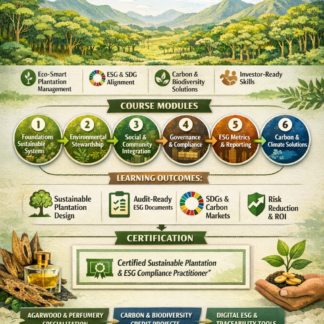
      • Sustainable Plantation Practices & ESG Compliance Course
      • TC ll – Agarwood Cultivation & Sustainable Farming Course
        • TESDA NC-ALIGNED MANUALS
        • 1.1 What is Agarwood?
        • 1.2 Aquilaria species overview
        • 1.3 Ecological significance & role in forest ecosystems.
        • 1.4 Value chain overview: chips, oil, incense, perfumery, wellness
        • 1.5 Global & local market: demand, supply, pricing patterns.
        • 1.6 CITES, DENR regulations, permits, licensing, and ethical trade. 
        • 2.1 Climate parameters (rainfall, elevation, wind, microclimates)
        • 2.2 Soil analysis: pH, texture, drainage, organic matter & amendments.
        • 2.3 Land assessment: slope, shade, accessibility, water sources
        • 2.4 Agarwood plantation layout
        • 2.5 Agroforestry integration for agarwood plantations
        • 2.6 Irrigation systems for agarwood plantations
        • 3.1 Seed selection, viability testing, sterilization
        • 3.2 Tissue culture (micropropagation & organogenesis) overview
        • 3.3 Nursery setup: shade nets, humidity, watering, root development
        • 3.4 Hardening & acclimatization protocols
        • 3.5 Nursery pest/disease management
        • 4.1 Planting techniques: timing, hole preparation, mulching
        • 4.2 Fertility management: compost teas, mycorrhizae, organic fertilizers.
        • 4.3 Weed control: manual, mulching, cover crops
        • 4.4 Pruning systems and canopy management for resin formation.
        • 4.5 Pests and diseases in the plantation and their control.
        • 4.6 Monitoring schedules (monthly, quarterly, annual)
        • 5.1 Soil Chemistry, Physical & Biological Properties
        • 5.2 Principles of Sustainable Soil Management
        • 5.3 Introduction to Crown Organic Biofertilizers, Inc. (COBI) Products
        • 5.4 Matching Biofertilizer Products to Soil Needs
        • 6.1 Application Timing and Methods
        • 6.2 Dosing Rates and Safety Measures
        • 6.3 How Organic Biofertilizers Improve Soil Biology
        • 7.1 Water Requirements for Agarwood
        • 7.2 Irrigation Planning for Sustainability
        • 7.3 Nutrient Cycling and Soil–Plant Nutrient Dynamics
        • 7.4 Integrating Organic Inputs with Irrigation
        • 8.1 Common Pests and Pathogens in Agarwood Plantations
        • 8.2 Low-Impact Control Strategies
        • 8.3 Role of Organic Amendments in Disease Suppression
        • 8.4 Monitoring and Record-Keeping
        • 9.1 Biology of Resin Formation in Agarwood
        • 9.2 Types of Inoculation Systems
        • 9.3 Timing and Field Protocols for Inoculation
        • 9.4 Safety, Hygiene, and Quality Controls
        • 10.1 Indicators for Harvest Readiness
        • 10.2 Harvest Techniques that Preserve Wood Quality
        • 10.3 Storage and Handling
        • 10.4 Traceability and Compliance
        • 11.1 Essential Farm Record Systems
        • 11.2 Using Digital Tools for Tracking Growth, Inputs, and Yields
        • 11.3 Simple Budgeting and Cost Analysis
        • 12.1 Business Models for Agarwood Enterprises
        • 12.2 Product Diversification (Chips, Oil, Luxury Wood)
        • 12.3 Market Access Strategies and Partnerships
        • 12.4 Financing, Cooperatives, and Investment Attraction
      • TC lll – Sustainable Agarwood Plantation Management & Carbon Farming
        • 1.1 Agarwood / Aquilaria species overview
        • 1.2 Global and local market for agarwood (chips, oil, resin)
        • 1.3 Conservation issues, CITES, and regulatory frameworks
        • 1.4 Carbon farming concept: why agarwood plantations matter for carbon sequestration
        • 1.5 ESG and impact investing opportunities in agarwood
        • 2.1 Climate, soil, and topography requirements for agarwood
        • 2.2 Agroforestry models: intercropping, nitrogen-fixing species, shade management
        • 2.3 Nursery management: propagation via seed, tissue culture, hardening
        • 2.4 Land use planning, spacing, density, and layout
        • 3.1 Soil fertility, organic amendments, biofertilizers
        • 3.2 Irrigation strategies, water conservation, rainwater harvesting
        • 3.3 Fertilizer management: findings from nutrient studies on agarwood
        • 4.1 Biology of agarwood formation: natural vs. induced resin development
        • 4.2 Artificial inoculation techniques (fungal, chemical, dual-action)
        • 4.3 Best practices for wound injection, tree health, monitoring
        • 5.1 Pruning, canopy management, pest/disease control, organic management
        • 5.2 Harvesting techniques: sustainable harvest, minimizing damage, resin assessment
        • 5.3 Value-added processing: chips, oil (e.g., distillation), hydrosol
        • 6.1 How agarwood sequesters carbon: biomass, soil, roots, deadwood
        • 6.2 Estimating carbon stocks, growth curves, and sequestration rates
        • 6.3 Carbon credit mechanisms: methodologies (e.g., ARR, Verra VM0047)
        • 6.4 MRV (Measurement, Reporting, Verification): sampling plots, inventory, remote sensing
        • 6.5 Risk management, permanence, buffer pools, safeguards
        • 7.1 Cost-benefit analysis of agarwood + carbon farming
        • 7.2 Financing: grants, ESG funds, green investment, carbon buyers
        • 7.3 Legal & regulatory: permits, land tenure, CITES, environmental compliance
        • 7.4 Monitoring and record-keeping for farm management
        • 8.1 Conservation and biodiversity: how plantations can support ecosystems
        • 8.2 Carbon co-benefits: watershed protection, employment, community benefits
        • 8.3 Certification and traceability (e.g., ethical sourcing, verification)
      • TC lV – Agarwood Digital Traceability & Blockchain Systems
        • 1.1 Evolution of agarwood trade and challenges in authenticity verification
        • 1.2 Overview of traceability concepts and regulatory requirements
        • 1.3 Digital ecosystems: blockchain, IoT, cloud databases, and QR certification systems
        • 2.1 Blockchain architecture and distributed ledgers
        • 2.2 Public vs. private blockchain systems
        • 2.3 Smart contracts: how they automate trust and payment
        • 2.4 Case studies: ASEAN blockchain traceability pilots
        • 3.1 Key data points from plantation to export (cultivation, inoculation, extraction, packaging)
        • 3.2 Integrating sensors, tagging systems (QR, RFID, NFC)
        • 3.3 Data recording, validation, and security
        • 3.4 Creating a “digital twin” for every agarwood batch
        • 4.1 Digital CITES permits and e-certifications
        • 4.2 Blockchain-enabled export systems
        • 4.3 Designing payment and contract automation
        • 4.4 Reducing fraud and trade bottlenecks through transparent ledgers
        • 5.1 Digital certificates of authenticity (NFT-backed proof of origin)
        • 5.2 Using blockchain for luxury branding and limited-edition Oud products
        • 5.3 Connecting traceability data with marketing narratives
        • 6.1 ESG data integration using blockchain
        • 6.2 Measuring carbon sequestration in plantations
        • 6.3 Carbon credit certification and trading platforms 
        • 6.4 Building sustainability dashboards for investors and regulators
        • 7.1 Setting up a blockchain traceability workflow
        • 7.2 Creating QR/NFT tags for Agarwood oil or chips
        • 7.4 Demonstration of digital ledger transactions
        • 7.4 Group project: prototype of a “Digital Agarwood Passport”
        • 8.1 Agarwood Cooperative Traceability Blueprint
        • 8.2 Digital Traceability Concept for Agarwood
    • ARTISANAL & PERFUMERY
      • Agarwood Beads & Jewelry Crafting Workshop
        • ASSESSMENT TOOLS PACKAGE
        • COMPETENCY MAPPING MATRIX
        • EXECUTIVE SUMMARY (ONE-PAGER)
        • Linking to TESDA Certification (Philippines)
        • TESDA TRAINING PLAN (TP)
        • TESDA-ALIGNED COMPETENCY FRAMEWORK
        • TESDA-appropriate cover letter
        • TRAINER QUALIFICATION MATRIX & CV TEMPLATE
        • UTPRAS REGISTRATION OUTLINE
        • 1.1 History and cultural significance of agarwood beads
        • 1.2 Types of agarwood and resin grades applicable to jewelry
        • 1.3 Safety, tools, and workspace setup
        • 2.1 Identifying high-resin agarwood pieces suitable for beads
        • 2.2 Sawing, planing, and initial shaping of agarwood material
        • 2.3 Conditioning and scent activation techniques
        • 3.1 Drilling, shaping, and lathe use for bead production
        • 3.2 Sanding and sequential grit polishing
        • 3.3 Maintaining natural scent integrity through handling
        • 4.1 Principles of jewelry design: balance, harmony, form
        • 4.2 Bead arrangement for bracelets, malas, pendants
        • 4.3 Incorporating natural fibers, cords, and metal findings
        • 5.1 Final sanding and polishing
        • 5.2 Protection/coating options (natural oils, wax finishes)
        • 5.3 Scent preservation strategies
        • 6.1 Sustainable packaging for artisanal jewelry
        • 6.2 Storytelling through product labels and branding
        • 6.3 Pricing strategies for artisanal and luxury markets
        • 7.1 Crafting product portfolios for craft fairs and online marketplaces
        • 7.2 Photography basics for ecommerce display
        • 7.3 Intellectual property basics for designs
      • Agarwood Candle Making Workshop
      • Agarwood Herbal Leaf Tea Preparation Course
        • Fresh Leaves Tea Process
        • Leaf Oxidation
      • Agarwood Incense Crafting Workshop
      • Agarwood Perfumery & Scent Preparation Training Course
      • Agarwood Soap & Bath Artistry Workshop
      • Agarwood Wine & Elixir Crafting Workshop
      • Art of Scent Design & Branding Masterclass Course
  • Academia Programs
    • Training Calendar
  • News & Update
  • Cart
  • TESDA
    • Agarwood Farming NC I
    • Agarwood Farming NC II
    • Agarwood Farming NC III
    • Annex A – Policy Brief – Justification for a Standalone TESDA Qualification: Agarwood Farming (NC I – NC III)
    • ANNEX E – ALIGNMENT MATRIX (TESDA–DENR–DA)
    • ANNEX F – ENDORSEMENT LETTERS (Industry / LGU / SUC)
    • ANNEX G – TESDA BOARD BRIEF (ONE-PAGE)
    • Annex H.1 Endorsement Letter – DENR CALABARZON
    • Annex H.2 Endorsement Letter – DA–ATI Director
    • ANNEX I – NC III CONCEPT NOTE
    • ANNEX J – PILOT FRAMING
    • ANNEX K – LADDERIZATION MATRIX
    • ANNEX L – COMPETENCY STANDARDS (CS) PER CORE UNIT NC III
    • ANNEX L – COMPETENCY STANDARDS (CS) PER CORE UNIT – NC II
    • ANNEX L – COMPETENCY STANDARDS (CS) PER CORE UNIT NC I
    • ANNEX N – CURRICULUM MAP & LEARNING MODULES
    • ANNEX O – CURRICULUM MAP & LEARNING MODULES
    • ANNEX P – LADDERIZED CURRICULUM MAP
    • ANNEX P – LETTER REQUEST FOR DENR ENDORSEMENT
    • ANNEX Q – DETAILED MODULE STRUCTURE FOR TRAINER AND TRAINEE GUIDES
    • ANNEX Q – LETTER REQUEST FOR DA–ATI ENDORSEMENT
    • ANNEX R – DETAILED MODULE STRUCTURE FOR TRAINER GUIDES (NC I–III)
    • ANNEX R – TRAINER’S METHODOLOGY GUIDE (TMG)
    • ANNEX S – TRAINER QUALIFICATION & ACCREDITATION MATRIX (TESDA-READY)
    • BARANGAY / LGU TRAINER’S GUIDE (FARMER‑FRIENDLY VERSION)
    • EXECUTIVE SUMMARY UPDATE – PILOT STANDALONE QUALIFICATION
    • MODULE 1 – SUPERVISORY MANAGEMENT AND PLANTATION OPERATIONS (NC III)
    • MODULE 1 – SUPERVISORY MANAGEMENT AND PLANTATION OPERATIONS (NC III)
    • MODULE 1 – SUPERVISORY MANAGEMENT AND PLANTATION OPERATIONS (NC III)
    • TRAINER’S METHODOLOGY GUIDE (TMG)
  • Checkout
  • My account
  • Privacy Policy
  • ₱0.00 0 items
Home / Cart

Cart

Your cart is currently empty!


New in store

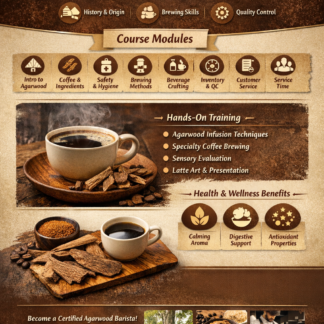
  • Agarwood Coffee Preparation Training Course
    Agarwood Coffee Preparation Training Course
    ₱20,000.00
    Add to cart
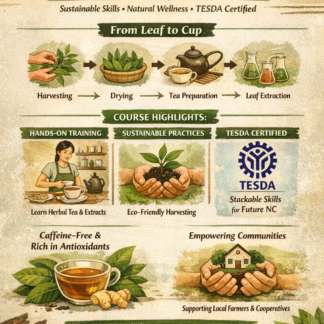
  • Agarwood Herbal Leaf Tea Preparation Training Course
    Agarwood Herbal Leaf Tea Preparation Training Course
    ₱20,000.00
    Add to cart
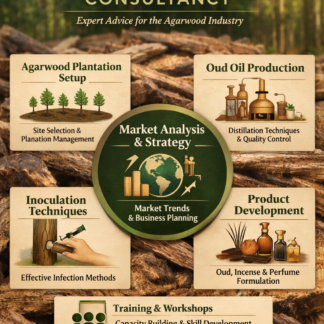
  • Agarwood Consultancy Services
    Agarwood Consultancy Services
    ₱20,000.00
    Add to cart
  • Cultural Trade & Ethics Course
    Cultural Trade & Ethics Course
    ₱15,000.00
    Add to cart

  • Agarwood Consultancy11 product
  • Agarwood Training Programs2727 products
    • Artisanal & Perfumery88 products
      • Agarwood Coffee Workshop11 product
      • Beads & Jewelry Workshop11 product
      • Candle Making Workshop11 product
      • Incense Crafting Workshop11 product
      • Leaf Tea Preparation11 product
      • Scent Preparation Training11 product
      • Soap & Bath Artistry11 product
      • Wine Crafting Workshop11 product
    • Enterprise & Sustainability44 products
      • Business Start-up11 product
      • Cultivation & Farming11 product
      • Digital Traceability11 product
      • Digitalization & Trade11 product
      • Enterprise Development11 product
      • Plantation Management11 product
      • Product Innovation11 product
      • Trade, Policies & CITES11 product
    • Heritage & Culture55 products
      • Cultural Studies11 product
      • Cultural Trade & Ethics11 product
      • Ethereal Oud & Spirituality11 product
      • Oud Heritage Exhibit11 product
      • Storytelling & Oral Histories11 product
    • Science & Technology1010 products
      • Analytical Chemistry11 product
      • Harvesting & Processing11 product
      • HydroDistillation System11 product
      • Propagation Methods11 product
      • Resin Induction Science11 product
      • SFE Technology11 product

  • CvSU and AGAP Sign MOU to Advance Organogenesis Propagation, Agarwood Bio-Inoculant Innovation, and Biofertilizer Development
  • Collaboration with the University of Santo Tomas (UST) on Bio-Inoculants & Bio-Fertilizers
  • Smart Agriculture
  • ISAT-U and CAGI Launch Landmark Partnership on Blockchain Traceability and Advanced Agarwood Cultivation
  • ASEAN agarwood leaders
January 2026
M T W T F S S
 1234
567891011
12131415161718
19202122232425
262728293031  
« Dec    
© Oud Academia™ 2026
Privacy PolicyBuilt with WooCommerce.