Ah, yes — oxidation is the key chemical process that determines the type, flavor, color, and aroma of tea. Let’s break it down carefully:
1. What is Oxidation in Tea?
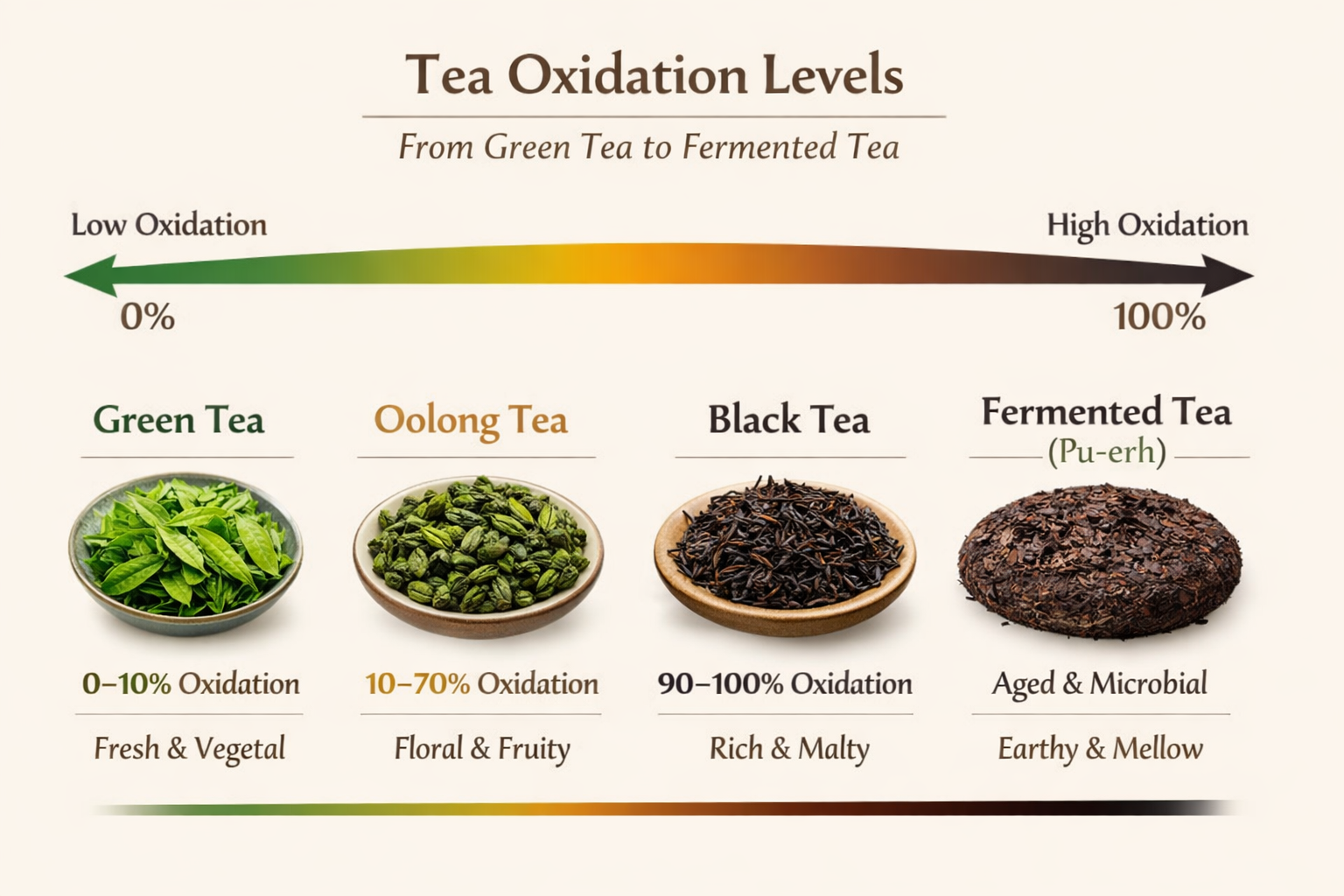
- Definition: Oxidation in tea is a chemical reaction where enzymes in the tea leaves (mainly polyphenol oxidase) react with oxygen after the leaves are bruised or rolled.
- Result: Tea catechins (polyphenols) are converted into theaflavins and thearubigins, which give black and oolong teas their darker color and richer taste.
⚠️ Note: This is enzymatic oxidation, not the same as rusting or fire-related oxidation. It’s sometimes misleadingly called “fermentation,” but true microbial fermentation only happens in post-fermented teas like pu-erh.
2. How Oxidation Happens
- Leaf cell walls are broken (rolling, crushing, or bruising)
- This releases enzymes and substrates.
- Exposure to oxygen
- Leaves are left in controlled humidity and temperature.
- Enzymatic reaction
- Catechins → Theaflavins (golden-orange compounds)
- Theaflavins → Thearubigins (brown-red compounds)
Effect: Leaf color changes from green → yellow → brown → dark brown. Aroma develops from grassy → floral → malty → earthy.
3. Oxidation Levels and Tea Types
| Tea Type | Oxidation Level | Characteristics |
|---|---|---|
| Green | 0–10% | Minimal; leaves fixed quickly to halt enzymes → keeps green color, fresh taste |
| Oolong | 10–70% | Partial oxidation → fruity, floral notes; color is amber-green to brown |
| Black | 90–100% | Fully oxidized → malty, strong flavor; dark brown to black leaves |
| Post-Fermented | Varies + microbial | Microbes further transform compounds over months/years → earthy, mellow flavor |
4. Factors Affecting Oxidation
- Leaf bruising/rolling: More cell damage → faster oxidation.
- Temperature & humidity: Warm and humid conditions accelerate oxidation.
- Duration: Longer exposure → darker, stronger flavor.
- Leaf age & variety: Younger leaves oxidize differently than mature leaves.
In short: oxidation is the “magic switch” that turns green leaves into oolong or black tea, controlling both color and flavor.
If you want, I can make a visual gradient showing tea types with increasing oxidation, so you can see at a glance how green → oolong → black → fermented develops chemically.
Do you want me to make that visual?